
The research base of the environmental organization Shelltone Whale Project, located in Cadaqués, is the world’s first facility dedicated to the study and development of cetacean-friendly research methodologies.
Under the direction of Pierre Lavagne de Castellan, this base conducts regular sea campaigns aimed at improving and standardizing cetacean observation protocols to minimize disturbance and avoid any negative impact on animals in their natural habitat.
These research activities are fundamental to our organization, whose primary objective is the conservation of cetaceans through the promotion of responsible, science-based whale watching practices.
OUR RESEARCH
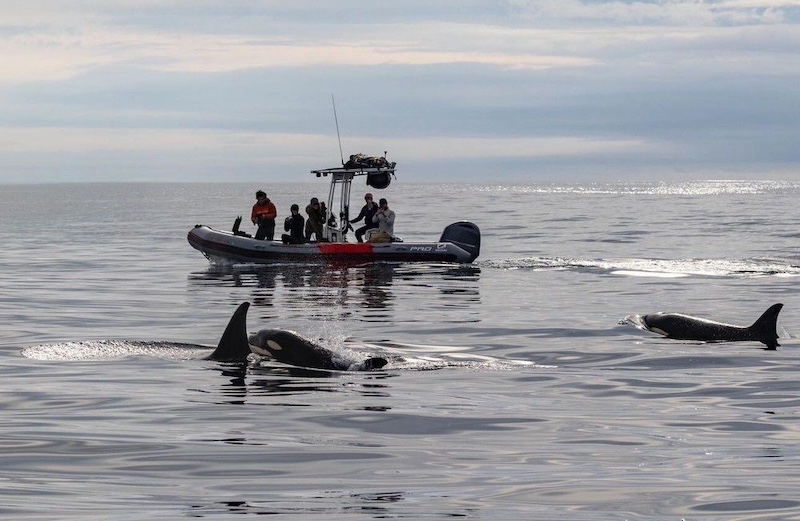
A new approach to the relationship between man and cetaceans
At Shelltone Whale Project, our research is based on a simple conviction: observing cetaceans must never interfere with their freedom. For several years now, we have been developing and testing non-intrusive approach protocols in real-life conditions, based on listening, behavioral reading and absolute respect for the animals in their natural environment. Our aim is not simply to observe. It’s to understand, refine and pass on a new way of relating to living things.
An Open-Air Laboratory: The Lacaze-Duthiers Underwater Canyon
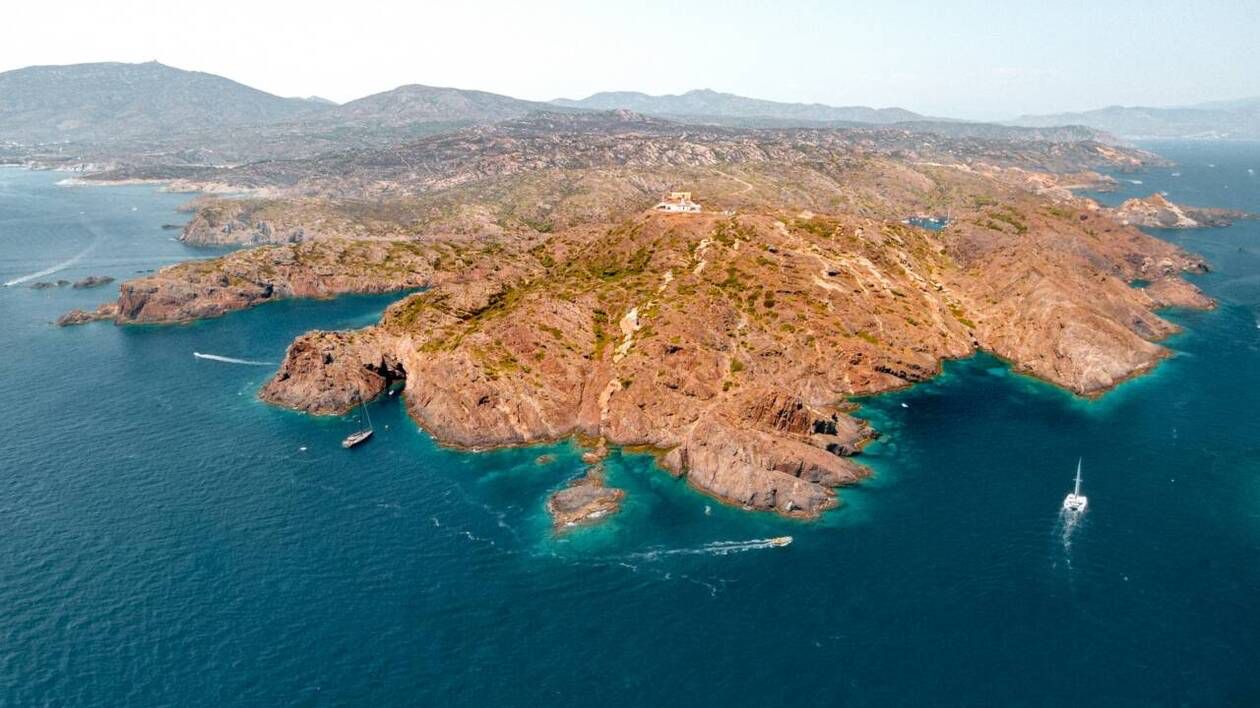
Our research base is located in Cadaqués, in the heart of the Cap de Creus Natural Park. This exceptional environment provides us with direct and rapid access to an underwater canyon that plunges to a depth of more than 2,000 meters—the Lacaze-Duthiers Canyon—a true ecological corridor where numerous marine species coexist. In this still-pristine area, we work under rare conditions: completely wild cetaceans, minimal human impact, and unaltered natural behaviors. This context makes this canyon a site unlike any other in the world for testing respectful approaches.
Ongoing, committed research in the field
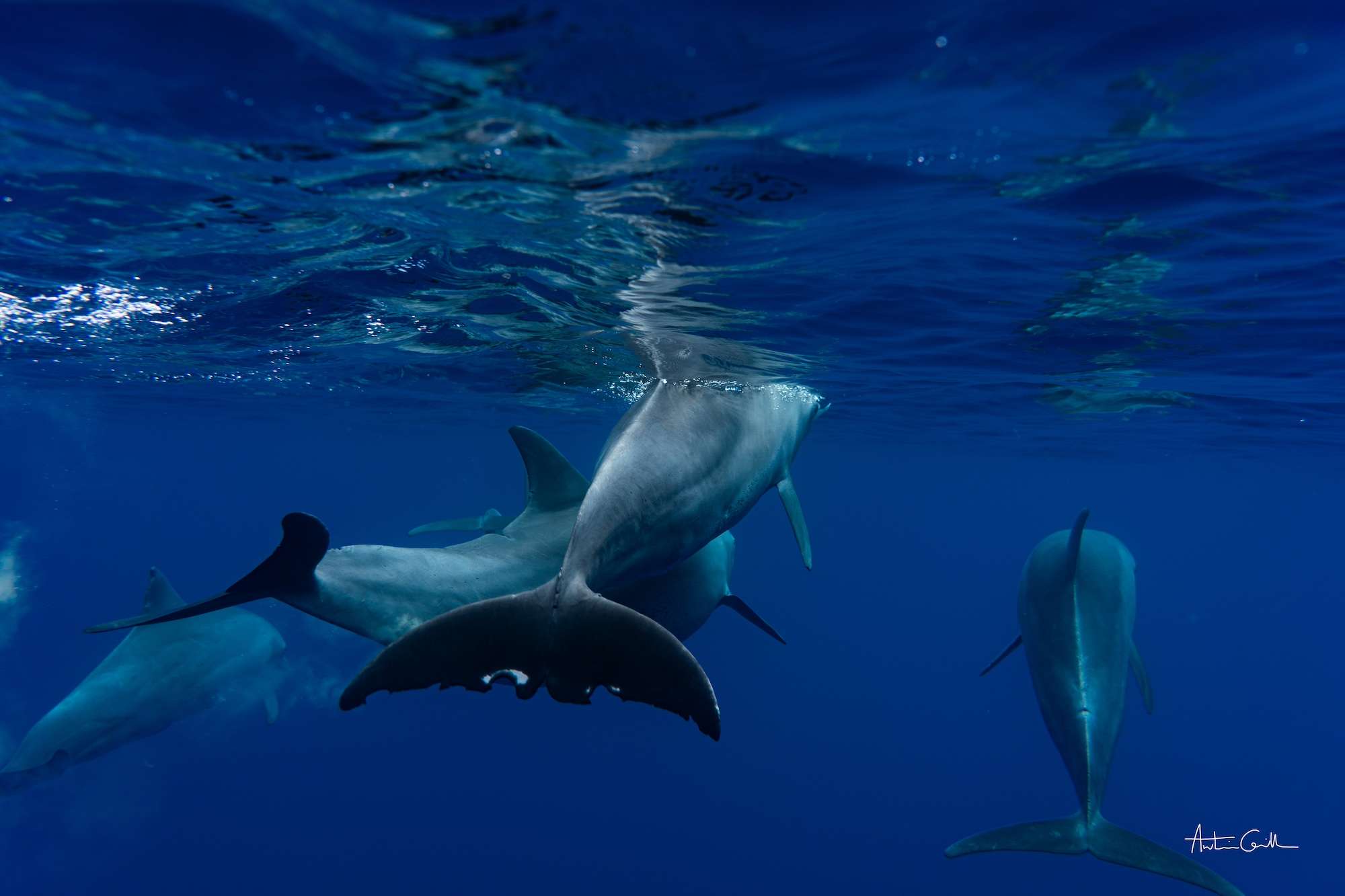
We conduct active observation missions there. During each field campaign, we analyze: the cetaceans’ reactions to human presence; optimal approach distances and angles; subtle behavioral cues; and conditions that foster peaceful interactions. For more than five years, this regular presence has allowed us to monitor changes in the ecosystem and gradually refine our methods.
Species studied
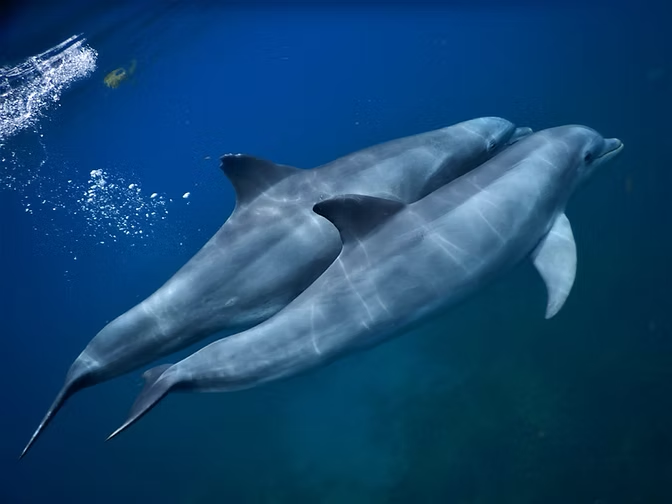
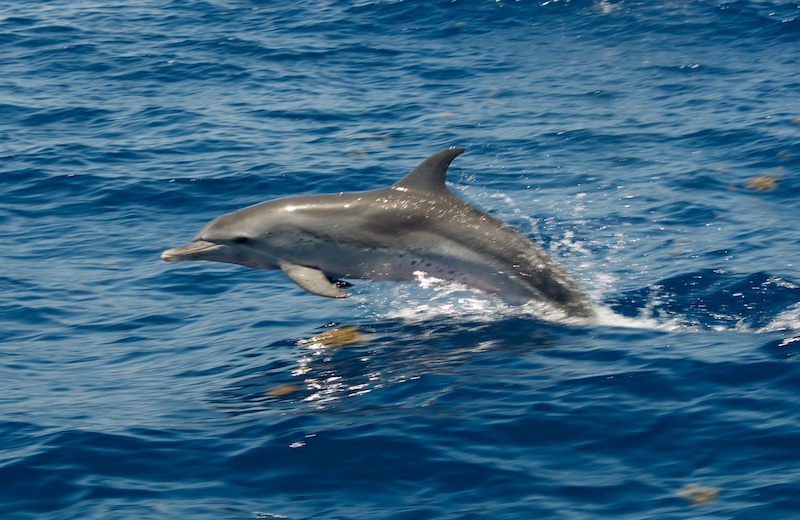
The Lacaze-Duthiers Canyon is home to, among others: the bottlenose dolphin (Tursiops truncatus, coastal), the striped dolphin (Stenella coeruleoalba, offshore), the fin whale, and the sperm whale. These species, which exhibit very different behaviors, provide an ideal research setting for developing adaptive approaches.
Towards an international standard of respect
One of the major challenges of our research is to standardize best practices. Faced with a rapidly expanding and often invasive whale watching industry, we are working to define methods that are: reproducible, transferable and applicable by operators worldwide. Our results feed directly into the selection of Shelltone Whale Project partners, all of whom are committed to a demanding ethical approach.
A philosophy: observe without disturbing
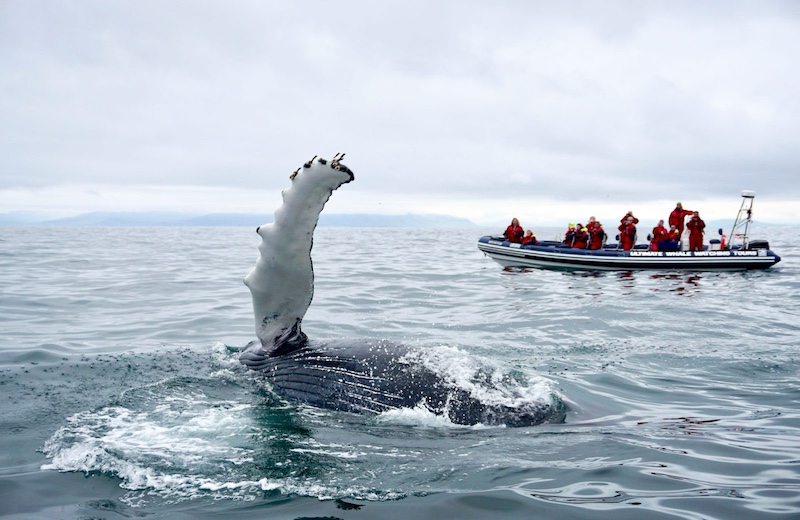
Cetacean watching can – and must – evolve. We advocate an approach in which: encounters are never forced, the animal remains free to interact, and quality takes precedence over proximity. It’s under these conditions that the most accurate… and powerful… experiences are born.
From research to action
Our Cadaqués base is much more than a study site: it’s a center for experimentation, validation and transmission. The methods developed here are then shared with selected operators around the world, contributing to the emergence of an international network of responsible observation.
TAKE ACTION TO PROTECT CETACEANS
BY CHOOSING THE RIGHT OPERATOR FOR YOUR OUTING
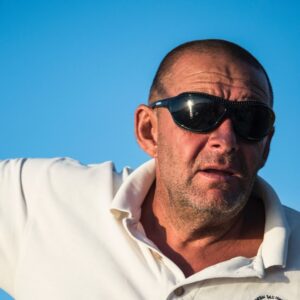
Pierre Lavagne De Castellan
Marine bioacoustician – Ethologist – Founder of Shelltone Whale Project
Since 1981, my passion for cetaceans and my research into inter-species communication with whales have led me to work in habitats where these animals live and reproduce. Over the years, I’ve watched whale watching evolve from a confidential practice reserved for enthusiasts and scientists in the 80s and 90s, to a mass tourism activity in the 2000s.
This uncontrolled development has led to a proliferation of boats in cetacean living areas, with approaches that are often disrespectful, dictated by the need to satisfy tourist expectations. The consequences of this constant harassment quickly became apparent: stress, loss of appetite and libido in the animals, and even abandonment of certain territories.
Despite the efforts of marine sanctuaries to regulate this activity through charters and training courses, many operators continue to flout the rules, seeking spectacular and intrusive approaches with no real controls.
Fortunately, I have met passionate and respectful operators, guided by their love of cetaceans and not by profit. Their knowledge enables them to take a gentle, respectful approach, creating authentic, peaceful encounters with the animals.
Shelltone Whale Project aims to list and promote these conscientious operators, offering everyone the chance to choose a harmonious, cetacean-friendly experience at sea. By booking your outings through our organization, you support our mission to promote responsible practices and protect cetaceans from intrusive approaches.


 English
  Français